Do White Pebbles Discolour? How to Keep Them White & Stop Them Going Green
Yes — outdoor white pebbles discolour in Britain. The stone itself usually stays white; algae, leaf stain and soil sit on top. The right grade, placement and an invisible sealer keep that crisp look for years, not months.
Do white pebbles discolour? Yes. In a UK garden they pick up a green, brown or grey film within months if the site and groundwork are wrong.
That is almost never the pebble changing colour. It is algae, leaf tannins and soil sitting on a porous surface — 150+ rain days, shade and falling leaves do the rest.
The stone you buy still matters. A grey-cast budget gravel looks dirty even when clean. Snow-White Thassos Marble Pebbles start luminous and come back bright after a wash.
Pair them with Natural Stone Sealer — an invisible finish that helps water and grime bead off instead of soaking in — and you stack the odds the right way.
Still deciding what to buy? See types of white garden stones. Already dull or green? How to clean white pebbles. Full sealing method: sealing garden stones.
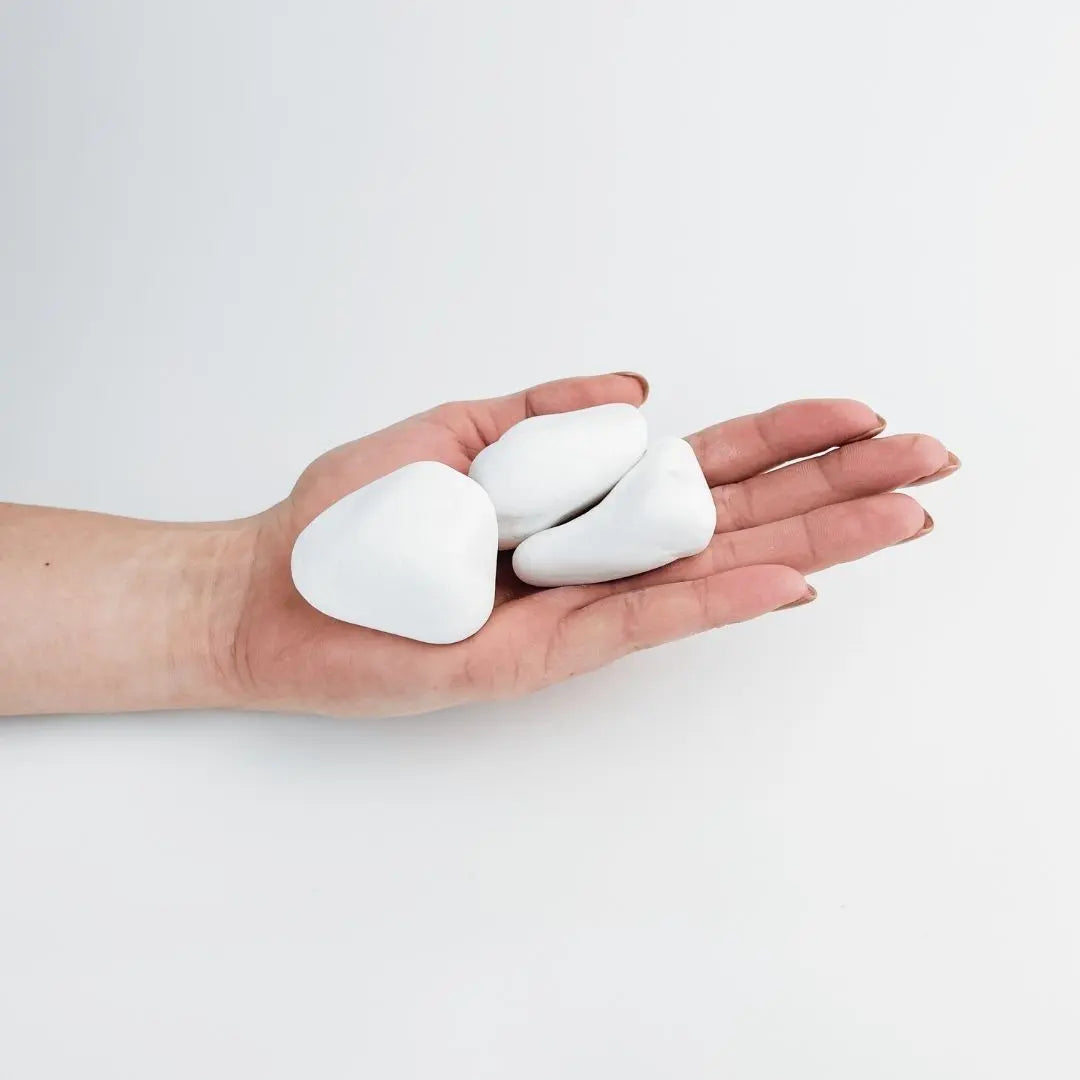
The stay-white kit

- Stone
- Snow-White Thassos marble
- Origin
- Thassos, Greece
- Sizes
- 10–30 mm · 30–60 mm · 60–100 mm
- Sample
- From £6.99 · free UK delivery
- Sealer
- Invisible 5 L water-repellent
- Sealer price
- £54.99 · no colour change
- Best used
- Sun, drainage, 95gsm+ membrane
Do White Pebbles Discolour?
Yes — outdoor white pebbles discolour in the UK. Rain, shade and organic debris leave a film of algae, leaf tannin or soil on the surface. The pebble itself rarely changes colour. Rinse a handful thoroughly, let it dry, and you will usually see the original white again. If that handful is still grey, you bought a grey-cast stone, not a white one that “went off”.
Searchers asking do white pebbles discolour are really asking two things: will the garden look dirty in six months, and is there a stone worth buying anyway? Honest answers:
| What you see | Is the stone discolouring? | What actually happened | Fix |
|---|---|---|---|
| Green film | No — surface growth | Algae and moss in damp shade | Sun, rinse, algae treatment, then seal |
| Brown / muddy patches | No — staining from below or beside | Bare soil, torn membrane, lawn clippings | Wash + 95gsm+ membrane + edging |
| Yellow / tea stains | No — organic tannins | Leaves, sap, bird lime sitting on marble | Clear debris promptly; annual wash |
| Looks grey when wet | Often yes — the stone was never pure white | Dolomite, spar or limestone with a grey cast | Cleaning will not invent brightness — switch to Thassos |
| Dull after a season | Surface grime on porous marble | Moisture + dirt soaked into unsealed stone | Clean, dry, then invisible sealer |
The short version: every outdoor white pebble can pick up a film. Pure Snow-White Thassos Marble Pebbles start from the brightest base and clean back to white. Budget “polar white” gravels start grey-cream and look greyer still when wet — that is not discolouration you can wash off. If you want the look in the photos, buy a stone that is actually white, lay it on membrane, and seal it.
Order a 1 kg sample of Thassos, wet it and leave it in the exact bed you have in mind. South-facing vs north-facing will tell you more in a fortnight than any product description.
White Pebbles Outdoors: Marble, Durability and Honest Expectations
Most bright white garden pebbles are marble or quartzite. Quartzite is harder and less porous, so it often resists algae a little longer in shade — but marble usually wins on the purest, brightest white when new. Searchers comparing quartzite vs marble pebbles are choosing between longevity in damp shade and maximum crisp whiteness.
Our Snow-White Thassos Marble Pebbles are tumbled natural marble from Greece: smooth, slightly textured, irregular ovals for pathways, borders, water features, memorials and decorative beds. Sizes are 10–30 mm, 30–60 mm and 60–100 mm — smaller grades for tight borders and pots, larger for feature areas and rockeries.
Marble outdoors: straight talk
Thassos is a calcite marble. It is softer and more porous than silica-rich stones — rain, organic debris and shade can encourage algae or dulling if you ignore placement and cleaning. That is not a flaw; it is how marble behaves in a damp climate. The payoff is colour: few materials match a good Thassos grade for a pure, luminous white straight out of the bag.
| Topic | What to expect |
|---|---|
| Best look | Maximum brightness when new; stays cleaner in sun, wind and open air |
| Shade & trees | Higher algae risk — plan more frequent rinsing and an invisible sealer |
| Acid rain / bird lime | Marble can etch or dull if acidic matter sits on the surface — rinse promptly |
| Ground contact | Never lay straight on bare soil; always use heavy membrane (see below) |
Optional sealing is the single biggest upgrade after buying the right stone. Our how to seal garden stones guide walks through the method. Product pages and winter protection notes cover seasonal care.
Snow White Thassos Marble vs Dolomite White Pebbles: How They Compare
The two most common bright white pebble types in the UK are Thassos marble and dolomite. Both can look good on day one. They do not age the same way — and that is exactly why people ask whether white pebbles discolour.
What is Thassos marble?
Thassos marble is quarried on the Greek island of Thassos in the northern Aegean. It is one of the purest white marbles on Earth — a crystalline calcite stone with virtually no mineral veining, iron content or colour impurities. The result is a luminous white that photographs true and looks even better in person. Our Snow-White Thassos Marble Pebbles are tumbled from this stone — the only genuine Thassos marble pebble from a UK garden stone supplier.
What is dolomite?
Dolomite is a magnesium-rich carbonate stone, widely quarried in Turkey and Eastern Europe. It is popular and easy to find. It tends to carry a slightly warmer or cooler undertone than Thassos — most obvious when the stones are wet or placed side by side. That undertone is what people later describe as “they went grey”.
Side-by-side comparison
| Quality | Snow White Thassos Marble | Dolomite White Pebbles |
|---|---|---|
| Colour tone | Clean, bright, luminous white — no undertone | White with a subtle grey or warm cast, depending on source |
| Origin | Thassos, Greece — single-source island quarry | Turkey / Eastern Europe — multiple quarries |
| Consistency | Highly consistent — the geology of Thassos produces remarkably uniform stone | Can vary between batches depending on quarry source |
| Wet appearance | Stays white with a subtle glow when wet | Darkens more noticeably when wet — reads as discolouration |
| Surface finish | Smooth tumbled — sheds water, resists algae grip | Varies by supplier; some tumbled, some rougher |
| UK availability | Rare — we are the only UK supplier offering genuine Thassos marble pebbles | Widely available from multiple retailers |
Choosing the right white for your garden
White pebbles are a statement. You choose them for crisp Mediterranean contrast against green foliage, dark borders or grey paving. Both stones can deliver a white look. The question is how bright and consistent you want that finish after the first winter.
With Snow-White Thassos Marble Pebbles you start from the purest possible base. The stone keeps its visual punch for longer, photographs properly for years, and gives you the garden you pictured. The unique geology of Thassos produces an exceptionally pure white that is difficult to replicate from other sources.
Are Thassos pebbles more of an investment?
Yes — Thassos is rarer, quarried from a single island, and delivers a distinctive brightness. The pebbles are the most visible part of the project, the thing every visitor notices first. Against membrane, edging and labour, the uplift is modest. Order a sample bag and compare it wet, in your actual garden, before you commit to bulk.
Seal White Pebbles So They Don't Discolour
If you only do one extra job after laying white marble, seal it. Porous stone drinks rain, dirt and organic matter. That uptake is what turns a bright bed dull, then green. A breathable, colour-neutral sealer fills those pores so water beads on top and rinses off — without darkening or yellowing the white.
We sell Natural Stone Sealer & Water Repellent specifically for this job. It is a water-based, invisible finish — not a wet-look coating — so Snow-White Thassos stays the same luminous white you paid for.
- No colour change — will not darken, yellow or add gloss to white marble
- Water-repellent — rain and dew shed instead of soaking in
- Slows algae — a drier surface is a harder place for green to take hold
- Easier cleaning — quarterly hose-downs actually work
- 5 L tin — enough for a typical border or patio bed · £54.99 including delivery
Do not use a wet-look or colour-enhancing sealer on white pebbles. Those products permanently darken or yellow pale marble — the opposite of “stay white”. Invisible / impregnating is the only finish that protects without changing the colour. Full method, coverage and safety notes are in our sealing garden stones guide.
When to seal
- Lay the pebbles on 95gsm+ woven membrane, 40–50 mm deep
- Let everything settle and dry completely
- Apply Natural Stone Sealer on a dry day between 5–35°C; keep rain off for 4 hours
- Re-seal when water stops beading and starts soaking in — often annually on exposed beds
Sealing over dirt or algae locks the problem in. If the stones are already green or brown, clean them first, let them dry, then seal.
High-Polished vs Natural: Does Finish Matter for White Pebbles?
For white pebbles that stay white longer, a smoother surface helps: rain and dew shed more easily and algae has less to grip than on rough crushed stone. Our snow white pebbles are tumbled — smooth and rounded with a little natural texture — a practical middle ground for UK gardens.
- Easier cleaning — hose-downs and pressure washing work better than on sharp, porous chippings
- Three size bands — 10–30 mm, 30–60 mm and 60–100 mm
- Try before bulk — order a sample bag and leave it in your garden through a bit of weather; south-facing vs north-facing makes a huge difference
For quantities, use the calculator below (or howmuchgravel.co.uk) and add ~10% for spreading loss. Our gravel quantity guide explains depth and coverage. The calculator builds a Stones4Gardens basket with the stone and enough 5 L sealer for the area, PebbleFinder 10% already applied — straight through to payment.
Where You Place Them Matters More Than You Think
The single biggest factor in how long white pebbles stay bright is location. The same snow white pebbles can look pristine for years on an open, sunny patio and pick up greening sooner under dripping trees or in permanent shade. Sealer slows that down; it does not cancel a dripping canopy.
Factors that accelerate discolouration
- Shade — algae and moss love damp, low-light spots. North-facing beds and under-canopy areas need more maintenance
- Overhanging trees — leaves, sap and bird droppings stain white marble. Clear debris promptly, especially in autumn
- Bare soil contact — soil wicks moisture and stains from below. Always lay on quality weed membrane
- Poor drainage — standing water keeps stone damp and encourages growth on the surface
- Proximity to lawn — grass clippings on white marble stain green. Use firm edging
Best locations for white pebbles
- South-facing beds and borders — sun dries the surface quickly
- Patios, pools and seating areas — usually open, drained and easy to sweep
- Indoor pots and conservatories — no rain or algae; white stays crisp indefinitely. See our indoor pebbles guide
- Front gardens — often more exposed to light and air than enclosed rear courtyards
How to Keep White Pebbles White: Maintenance Guide
Outdoor white pebbles — including our snow white pebbles — benefit from a simple routine. Indoors they need almost none beyond dusting. Sealed stone needs the routine less often.
How to stop white pebbles (and gravel) going green
Greening is almost always algae, driven by moisture and shade. The way to get white garden stones that don't go green is to attack the causes: choose the sunniest, best-drained position, lay on heavy membrane, keep leaves off the surface, rinse before a film sets, and seal so the surface dries faster. Where green has already taken hold, our full how to clean white pebbles guide covers reviving them.
Monthly (about 5 minutes)
- Clear leaves, twigs and organic debris — a leaf blower on low works well
- Spot any green patches early while they are easy to treat
Quarterly (about 30 minutes)
- Hose the area to shift surface grime
- Spot-treat algae with a diluted proprietary algae remover from a garden centre (follow the label; protect nearby planting)
Annually (1–2 hours)
- Pressure wash with a wide fan nozzle at moderate pressure — very effective for refreshing white marble
- Re-seal with an invisible outdoor stone sealer — see our sealing guide for the method
- Inspect membrane — replace torn sections so soil cannot migrate up into the pebble layer
Ground preparation
Most dulling and staining from below is avoidable:
- Clear vegetation and treat perennial weeds; wait for dieback
- Level and compact soil; remove organic debris
- Lay heavy-duty woven membrane (100 gsm+) — essential under white marble
- Overlap joins by at least 150 mm and pin securely
- Lay pebbles 40–50 mm deep (deeper for very large sizes). Follow our how to lay decorative stones guide
- Once dry, apply Natural Stone Sealer so the first winter does not write itself into the stone
Order Snow-White Thassos Marble Pebbles from sample bags up to bulk, then add the 5 L invisible sealer to the same order.
Build your stay-white kit — 10% off at checkout
Tap what you are covering, enter the size, and we pack the Thassos bags plus enough invisible sealer into one Stones4Gardens basket.
Typical border is about 40 cm wide — just type the length.
Width is pre-filled for a typical garden border— change it if yours is different.
Fine-tune size, depth and extra stone
Paths, garden borders, pool surrounds
Pick what you’re covering, then enter the size. We’ll pack the bags and sealer for you.
The stones — and the sealer — that stay white
Start with Snow-White Thassos Marble Pebbles (white all the way through, from £6.99 a sample) and lock the finish in with Natural Stone Sealer & Water Repellent — 5 L, invisible, £54.99, free UK delivery. Every link opens the Stones4Gardens product page ready to pay.

Snow-White Thassos Marble Pebbles — 10/30 mm
10/30 mm · Sample
Snow-White Thassos Marble Pebbles — 30/60 mm
30/60 mm · Sample
Snow-White Thassos Marble Pebbles — 60/100 mm
60/100 mm · Sample
Natural Stone Sealer & Water Repellent
5 L · Invisible finishPro tips
Buy a white that is actually white — then seal it
Discolouration on cheap grey-cast gravel is mostly the stone you bought. Start with Snow-White Thassos and lock it in with Natural Stone Sealer (invisible finish) so algae and tannins sit on top instead of soaking in.
Prioritise sun and drainage for outdoor white pebbles
Lay snow white pebbles in the brightest, best-drained parts of the garden first. Reserve deep shade for areas where you are happy to rinse or pressure-wash more often.
Use 95gsm+ weed membrane — never skip it
Soil contact is the main reason white marble goes brown or patchy from underneath. Heavy-duty 95gsm woven membrane, overlapped and pinned, is a small cost next to the pebbles themselves.
Indoors, white pebbles stay effortlessly crisp
For zero-algae bright white, use snow white pebbles in planters, terrariums and interior displays — no rain, no algae, and no sealer required.
Frequently asked questions
Do white pebbles discolour?
Yes. Outdoors in the UK, white pebbles pick up a green, brown or grey film from algae, leaf tannins and soil — often within months in shade. The stone itself usually stays white underneath; a thorough rinse shows the original colour. A pure grade such as Snow-White Thassos Marble Pebbles starts brighter and cleans back to white. Membrane, sun, debris-clearing and an invisible stone sealer slow the film from coming back.
Do white garden stones discolour?
Any outdoor stone can pick up organic staining over time. Our snow white pebbles start exceptionally bright; keeping them that way is about site choice, membrane, clearing debris, occasional washing and sealing — very doable with a sensible routine. If a stone looks grey even when clean and dry, it was never a true white.
How long do white pebbles stay white outdoors in the UK?
It depends on stone type, shade, drainage, sealing and cleaning. In an open, sunny, well-drained bed with membrane underneath, bright marble grades like our snow white pebbles can stay impressively white for years with an annual wash and a coat of invisible sealer. In deep shade under trees, algae may appear sooner — treat early.
Why do white pebbles go green or yellow?
Green is almost always algae in damp shade. Yellow or tea-coloured marks are usually leaf tannins, sap or bird lime sitting on porous marble. Neither means the pebble has changed colour. Clear debris, wash, then apply Natural Stone Sealer so the next season's muck rinses off. Full revival steps are in our cleaning guide.
Can I bleach white pebbles to clean them?
Bleach can damage planting and soil life outdoors. Prefer a garden-centre algae or stone cleaner labelled for outdoor use. For pebbles used only indoors in pots, a dilute bleach soak with thorough rinsing is sometimes used — keep it away from plants and pets.
Should I seal white pebbles to stop them discolouring?
Yes, if they are porous marble and they live outdoors. An invisible, breathable sealer does not change the colour — unlike wet-look products, which darken white stone. We use Natural Stone Sealer & Water Repellent (5 L, £54.99) on Thassos pebbles. Clean and dry the stone first; method in our sealing guide.
What is the best way to buy white pebbles for a first project?
Order a sample of snow white pebbles in the size you prefer, wet and dry it in your actual garden spot, then scale up with the calculator on this page (10% PebbleFinder discount applied at checkout) plus ~10% extra. Add a tin of Natural Stone Sealer to the same Stones4Gardens order.
Do white pebbles make a garden look bigger?
Yes. Light surfaces reflect more light and feel more open. Very bright grades such as our snow white pebbles work especially well in small courtyards paired with green foliage.
How do I stop white pebbles going green?
Algae is the usual cause. Choose sunny, airy positions where possible, install drainage and 95gsm+ membrane, keep leaves off the surface, and rinse regularly. If green appears, treat promptly with an appropriate outdoor cleaner. Sealing helps slow moisture uptake on snow white pebbles and other marble outdoors.
What is the difference between Thassos marble pebbles and dolomite white pebbles?
Thassos marble is a pure crystalline white stone quarried in Greece — it has virtually no undertone and stays bright even when wet. Dolomite is a different mineral, widely available and popular, with a slightly warmer or cooler tone depending on the quarry source. Both are good options; Thassos delivers a particularly intense, consistent whiteness. Our Snow-White Thassos Marble Pebbles are the only genuine Thassos marble pebbles available from a UK garden stone supplier.
Does white gravel stay white outdoors?
It can, with the right choice and care. Denser, purer white stone stays brightest — budget white gravels with a grey cast look greyer still when wet. In a sunny, well-drained bed over membrane, quality white gravel and pebbles like our snow white pebbles hold their colour for years with an annual wash; in damp shade, plan to rinse more often or seal.
How do I stop white gravel going green?
The same rules apply as for pebbles: green is algae feeding on moisture and organic debris. Keep gravel in sun and airflow where you can, lay it over 95gsm+ membrane with good drainage, clear leaves promptly, and rinse regularly. Treat any green early with an outdoor stone-safe algae remover, and consider sealing. Full steps are in our how to clean white pebbles and gravel guide.
How do I keep white garden stones clean?
A light routine does most of the work: clear debris monthly, hose quarterly, and pressure-wash once a year. For stones that have already dulled or greened, follow our dedicated cleaning guide; to keep them cleaner for longer between washes, Natural Stone Sealer helps grime rinse off instead of soaking in.
Related guides
How to Clean White Pebbles & Garden Stones (and Make Them White Again)
How to clean white pebbles, stones and gravel: remove algae and green, lift dirt and stains, and make dull white stones bright white again — step by step.
Read guide →
Sealing Garden Stones & Pebbles: Why, How and Is It Worth It?
Should you seal garden stones? Honest UK guide to why sealing decorative stone and pebbles helps, how easy it is, and how to apply EKSIL EH17 — a breathable, colour-neutral stone sealer.
Read guide →
Types of White Garden Stones Compared: Which White Pebbles, Gravel or Chippings to Buy
Compare white garden stones — marble, spar, limestone, granite, quartz and dolomite, plus pebbles vs gravel vs chippings. Which is whitest and best value?
Read guide →
Snow-White Thassos Marble Pebbles: The Brightest White Stone for UK Gardens
Pure Greek Thassos marble pebbles — the brightest white stone in the UK. Three sizes for paths, borders, pots and water features, with care tips and prices.
Read guide →
How to Lay Decorative Stones in Your Garden: Step-by-Step
Step-by-step guide to laying decorative stones in your UK garden: ground prep, membrane, depth by stone size (with Stones4Gardens product examples), edging and stepping stones.
Read guide →
White pebbles do discolour outdoors — unless you start with a pure white and protect it. Shop Snow-White Thassos Marble Pebbles in 10–30 mm, 30–60 mm or 60–100 mm, add Natural Stone Sealer (5 L invisible finish) to the same basket, or try a sample first. Use the calculator above for 10% off at checkout.